Perimenopause and Joint Pain: Why Your Body May Feel Different During Menopause
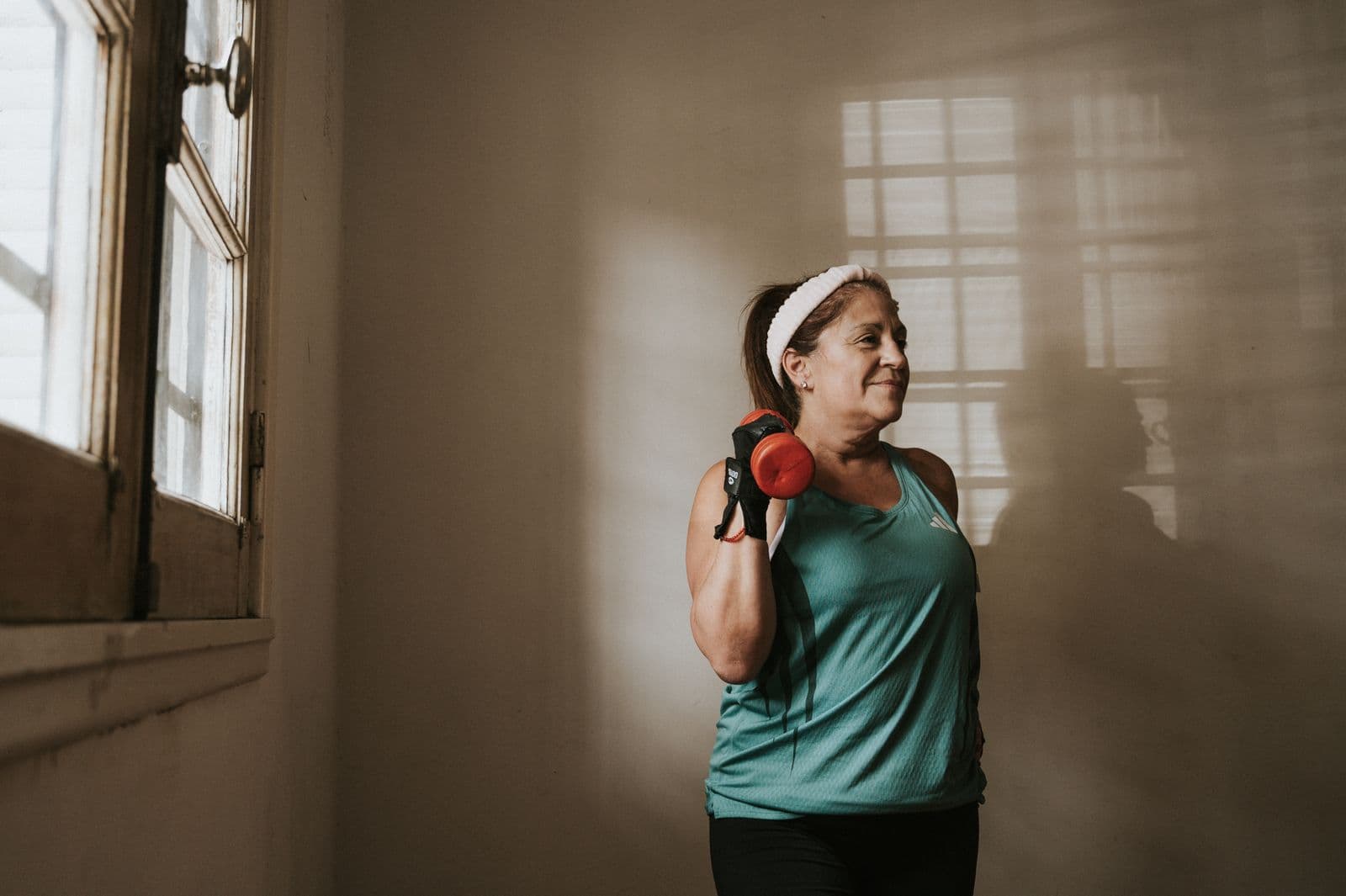
You may have noticed that your body doesn't feel quite the same as it used to.
Perhaps your knees have started aching after exercise; your shoulders feel stiffer in the morning, or you're experiencing muscle soreness after workouts that previously felt completely manageable.
If you're going through perimenopause or menopause, you may be wondering whether these changes are connected.
The answer is: they can be.
Hormonal changes during the menopause transition can affect many aspects of musculoskeletal health, including muscle strength, bone health and connective tissue. However, this doesn't mean that pain or injury is inevitable, and it certainly doesn't mean you need to stop exercising.
In fact, this can be an important time to become more intentional about how you train and look after your body.
Why might your joints feel different during perimenopause?
Perimenopause is the period leading up to menopause, when hormone levels begin to fluctuate. Oestrogen levels can become more variable before eventually declining.
Oestrogen has effects throughout the body, including on bones, muscles and connective tissue. Changes in hormone levels may therefore coincide with changes in how you experience exercise and musculoskeletal symptoms.
You might notice:
- Generalised joint stiffness
- Morning stiffness
- Pain after periods of inactivity
- Increased soreness after exercise
- New aches in previously symptom-free joints
- Tendon pain around areas such as the shoulder, knee, hip or Achilles
However, menopause isn't necessarily the sole cause of these symptoms.
Age, previous injuries, changes in activity, sleep, stress and training load can all contribute. Often, several factors interact at the same time.
Does menopause cause tendon problems?
This is an area that receives increasing clinical attention.
Tendons respond to the loads placed on them, and this process can be influenced by factors including age, activity levels and hormonal changes.
Conditions such as Achilles tendinopathy, gluteal tendinopathy and rotator cuff-related shoulder pain may become particularly relevant during the menopause transition.
But this doesn't mean that hormones are the sole cause.
For example, you may have recently started lifting weights again, increased your walking, taken up running, or joined a new fitness class. If your activity has increased faster than your tissues are prepared for, this change in loading may be the more immediate reason your symptoms have developed.
A physiotherapy assessment can help identify how these different factors contribute.
Should you stop exercising if you have joint pain?
Usually, no.
When pain develops, it is understandable to become cautious. You may stop lifting weights, avoid longer walks, or give up activities you enjoy because you're worried about making things worse.
However, completely avoiding activity can lead to reduced strength and physical capacity, which may make returning to exercise more difficult.
For many musculoskeletal problems, appropriately dosed exercise is part of the solution rather than the problem.
The goal isn't necessarily to eliminate loading, but to find the right level of loading for your current capacity and gradually build from there.
Why is strength training important?
One of the most valuable forms of exercise during the menopause transition is resistance training.
Maintaining muscle strength and mass becomes increasingly important as we age. Strength training can help maintain physical function while providing an appropriate stimulus for your muscles, tendons and bones.
A 2026 systematic review and meta-analysis found that exercise-based rehabilitation can improve aspects of musculoskeletal health and physical function in postmenopausal women, supporting the use of personalised, progressive exercise programmes.
Strength training doesn't have to mean lifting extremely heavy weights.
It could include:
- Squats or split squats
- Lunges
- Deadlift variations
- Step-ups
- Calf raises
- Rows
- Shoulder presses
- Core strengthening
- Carrying exercises
The important factor is progressive loading - gradually making the exercises more challenging as your strength improves.
For many females, two resistance-training sessions per week can be a useful starting point alongside cardiovascular exercise and activities they enjoy.
What about bone health?
Bone health is another important consideration during and after menopause.
Oestrogen plays an important role in maintaining bone health, and declining oestrogen levels can contribute to increased bone loss.
Weight-bearing activity and resistance training can therefore be valuable components of a healthy exercise routine.
If you have concerns about your bone health or risk factors for reduced bone density, speak to your GP about whether further assessment is appropriate.
Don't blame every ache on menopause
This is an important point.
Menopause can be relevant to your musculoskeletal health, but not every new pain is a menopause symptom.
For example, persistent shoulder pain could be related to rotator cuff problems, bursitis, or refer from your neck. Knee pain can have a number of different mechanical causes, while tendon pain may simply reflect a recent increase in activity.
Understanding the actual cause of your symptoms is important because it determines how they should be managed.
Simply being told “it's because of menopause” doesn't give you a useful treatment plan.
How can physiotherapy help?
A physiotherapist can help you understand what is contributing to your symptoms and how to safely build your physical capacity.
An assessment may consider:
- Joint mobility
- Muscle strength
- Tendon capacity
- Balance and movement control
- Previous injuries
- Your current exercise routine
- Changes in your activity levels
- How your symptoms respond to exercise
- Your individual goals
Your treatment can then be tailored to you. The aim isn't simply to treat the painful area. It's to understand why the problem has developed and what needs to change to help you return to the activities you enjoy.
When should you seek help?
Consider seeing a physiotherapist if:
- Joint or muscle pain is persistent
- Pain is interfering with sleep
- You're repeatedly developing injuries
- You're struggling to return to exercise
- You've noticed a significant reduction in strength
- You have significant stiffness or loss of movement
- Pain is preventing you from doing activities you enjoy
You don't have to accept ongoing pain or reduced physical activity as an inevitable part of menopause.
The takeaway
Perimenopause and menopause can bring significant changes to your body, but pain and reduced physical function are not something you simply have to accept.
Your body may respond differently to exercise than it did previously, but that doesn't mean you should stop challenging it.
Instead, it may be time to adjust how you train.
Build strength progressively. Stay active. Allow enough time for recovery. Pay attention to persistent symptoms rather than repeatedly pushing through them.
And if something doesn't feel right, get it assessed.
At Stride Sports Physiotherapy, we help females stay active through all stages of life, whether you're managing a new injury, returning to exercise or looking to build strength and resilience.
If you're experiencing persistent muscle, joint or tendon pain and want to understand what's going on, book an assessment with Stride Sports Physiotherapy.